

INTRODUCTION
For many men, urinary symptoms related to an enlarged prostate (BPH) may initially be managed with lifestyle changes or medication.
When symptoms persist or begin to affect daily life, exploring treatment options becomes an important next step.
HoLEP (Holmium Laser Enucleation of the Prostate) is one of several minimally invasive surgical approaches that may be considered in appropriate cases.
Understanding how these options work can help guide informed decisions about care.
What is BPH (enlarged prostate)?
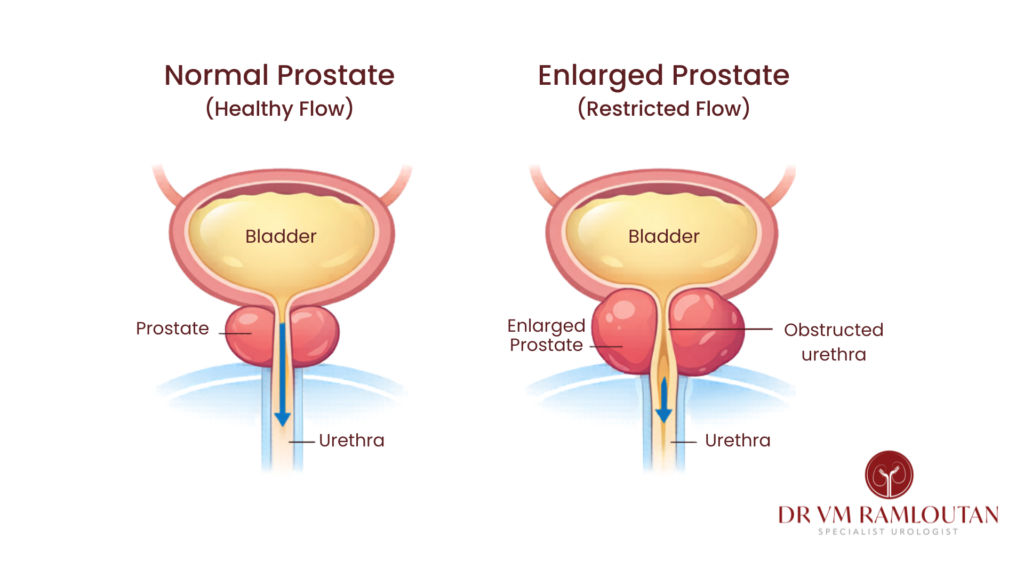
Benign prostatic hyperplasia (BPH) refers to the enlargement of the prostate gland, which can place pressure on the urethra and interfere with normal urine flow.
Common symptoms may include:
- Frequent urination
- Difficulty starting urination
- Weak urine stream
- Waking at night to urinate
Not all men with BPH require intervention. In many cases, symptoms can be monitored or managed conservatively depending on their severity.
For a broader overview of symptoms and when to seek care, read:
BPH (Enlarged Prostate): Symptoms and When to See a Specialist Click here
When Might Treatment Be Considered?
Initial management of BPH may include lifestyle adjustments or medication.
However, some individuals may continue to experience persistent or worsening symptoms despite these measures. In such cases, procedural options may be discussed as part of a broader treatment plan guided by a healthcare professional.
Different procedures may be considered depending on the size of the prostate, the nature of symptoms, and individual clinical factors.
At this stage, many men are comparing different treatment options and trying to understand which approach may best suit their symptoms and individual needs.
What is HoLEP treatment for an enlarged prostate?
Holmium Laser Enucleation of the Prostate is a minimally invasive surgical procedure used in the management of urinary obstruction caused by BPH.
The procedure involves the use of a laser to remove excess prostate tissue that is blocking the flow of urine. This is performed through the natural urinary passage (urethra), meaning there are no external incisions.
HoLEP is one of several procedural options that may be considered depending on the individual patient’s condition and clinical assessment.
Minimally invasive treatment options for enlarged prostate
Minimally invasive procedures are designed to treat conditions while reducing the need for large incisions.
In urology, these approaches aim to:
- Improve urinary flow
- Reduce recovery time in appropriate cases
- Minimise disruption to surrounding tissue
The most suitable treatment approach will always depend on individual factors and should be discussed with a qualified healthcare provider.
Clinical Experience and Evolving Practice
Advances in urological care have expanded the range of available treatment options for BPH over time.
Earlier clinical experiences with procedures such as HoLEP have been documented in hospital-based publications, providing insight into how these techniques have been introduced and applied in practice.
These developments reflect a broader shift toward minimally invasive techniques in modern urology.
When should you see a urologist for enlarged prostate symptoms?
If you are experiencing ongoing urinary symptoms, it may be helpful to consult your general practitioner or a urologist for further evaluation.
Early assessment can help guide appropriate management and provide clarity on available options.
Summary
An enlarged prostate is a common condition, and a range of management options are available depending on symptom severity and individual clinical findings.
HoLEP is one of several minimally invasive surgical options that may be considered in appropriate cases following specialist assessment.
If your symptoms are persistent or affecting your quality of life, a consultation may help determine the most suitable approach.
Disclaimer
This article is intended for general educational purposes only and does not replace professional medical advice, diagnosis, or treatment. Individual care decisions should always be made in consultation with a qualified healthcare professional. Suitability for procedures such as HoLEP depends on individual clinical assessment and medical history.